Success stories
“I love Stuttgart and its people because they make so much possible for me.”
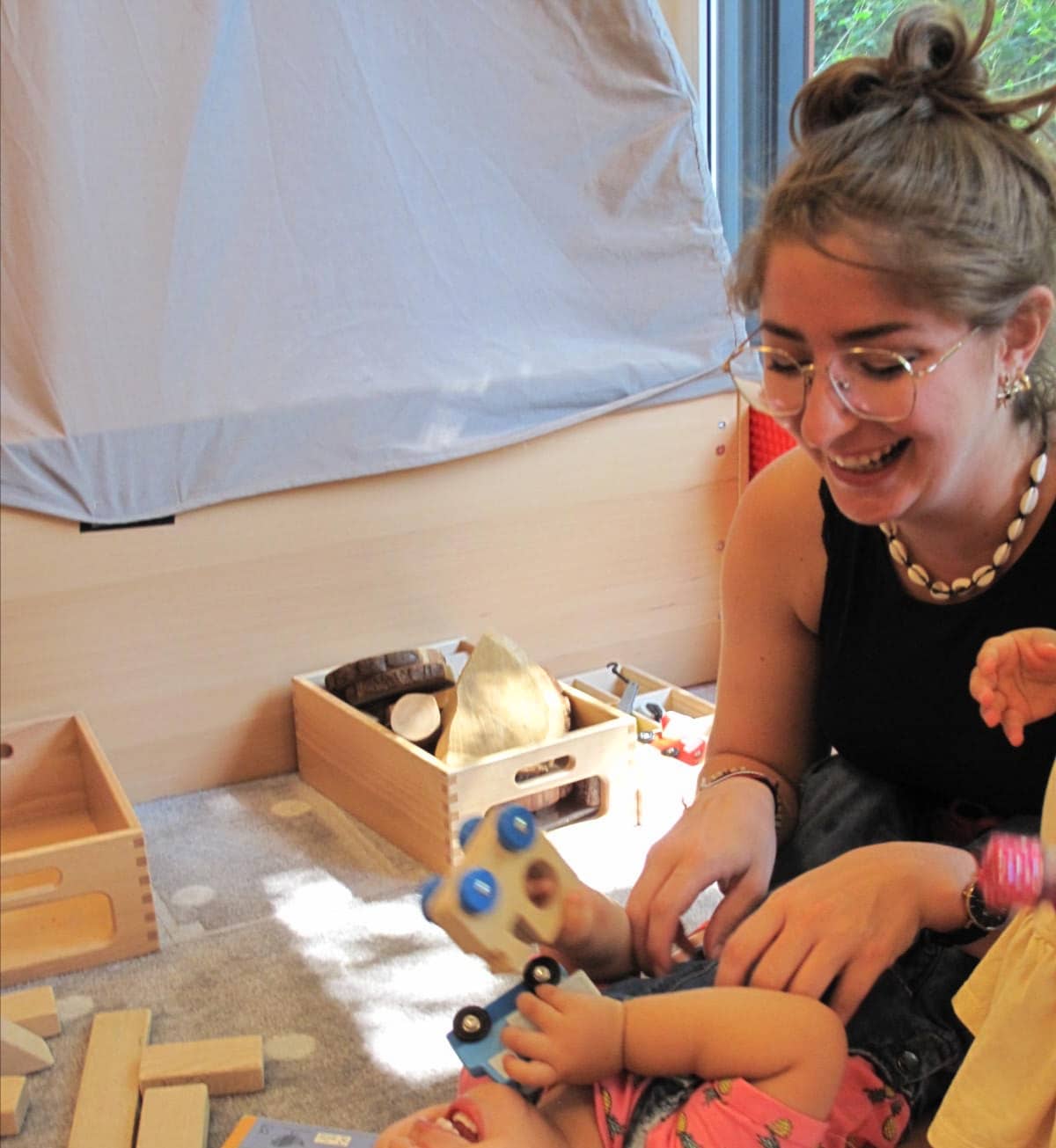
Maria Grazia Puglia comes from Naples in Italy. She has found a new home in Stuttgart and has trained as an educator.
Maria Grazia received support from the Welcome Center Stuttgart and the partners in its network for the integration of Italian immigrants into the labor market. With the idea of staying in Germany, she came to Stuttgart to do an FSJ with the Italian organization ACLI.
I am very grateful to the Welcome Center Stuttgart: It helped me to find a suitable language course, a health insurance company and a bank.
At the event “Vivere e lavorare in Germania/Living and working in Germany: entering the job market and prospects with an apprenticeship” for Italian migrants, Maria Grazia learned how many opportunities she has in Stuttgart. This also motivated her to find an apprenticeship herself – with success!
In Stuttgart, she first did a practical year in a kindergarten and learned German at the same time in order to start an apprenticeship there this year.
I’m glad that I took the plunge! For me, Stuttgart means independence and autonomy. I can learn many new things here, not just the German language.
A new career start with the consultation hour in the Stuttgart districts
Elena Lugovaya came to Germany from Russia in 2017. She had already studied in the Stuttgart Region, completed an internship and made numerous contacts. She spoke German well and was familiar with the region.
She became aware of the regional consultation hours of the Welcome Service Region Stuttgart through the Welcome Center Stuttgart newsletter. She regularly informed herself about offers and actively participated in events – for example on the topics of “Finding a job in the Stuttgart Region”, “Women and the job market” or “Recognition of foreign qualifications”.

After one of these events, she made a personal appointment with Naira Shakhsuvaryan. The advisor in the district of Esslingen took a lot of time, looked through Elena’s documents carefully and explained the process of having her foreign qualifications recognized. Shortly afterwards, Naira contacted the Welcome Center Stuttgart again with the offer of an internship. The internship proved to be decisive: Elena now works as a clerk at the Immigration Office in Esslingen. The regional consultation hour and the subsequent internship opportunity paved the way for her to enter the German civil service.
Nevertheless, it was not easy to get started:
As a career changer in immigration law, it was difficult for me at the beginning to understand all the contexts and to work with new laws. The first few months were stressful and I had a lot to learn.
But thanks to the internship and helpful sources of information, she gradually found her way into her new role: “It helped that I learned some legal basics during my internship and got to know useful websites where I could find additional information.”
With regard to her experiences, Elena emphasizes: “Many immigrants are not familiar with German law. She would therefore like authorities and employers to take more time in future to provide people from abroad with clear information about their rights and obligations.
Elena also has an important tip for other international professionals who want to gain a foothold in Germany:
Many foreigners who come to Germany easily find a national community and tend to only talk to people of their own nationality. I am convinced that this is the wrong approach. You don’t get to know German culture that way, which is very important for successful integration.
She recommends learning German, even if English is sufficient for many areas of work. Free events offered by cities, libraries, municipalities and institutions such as the Welcome Center Stuttgart are a great way to practice the German language, make new contacts and get valuable ideas for integration.